BENCHISTA-2026
International Benchmarking of Childhood Cancer Survival by Stage
Second in-person Project Working Group Meeting, held on June 15th and 16th in Milan, Italy.
Claire Poulalhon and Emmanuel Desandes, co-Directors of the National Registry of Childhood Cancers (RNCE), participated in the 2nd BENCHISTA workshop, held in Milan, Italy, on

GRELL-2026
50th GRELL scientific sonference (Group for Epidemiology and Cancer Registry in Latin Language Countries), held from 13-15 May 2026 in Dijon, France
On May 14, Emmanuel Desandes (epidemiologist and Director of the National Registry of Childhood Solid Tumors) presented the results of the study “EPI-CHILD-CNS – Trends

Annual Meeting of RNCE Investigators: A Day Dedicated to Childhood Cancer Data Collection
On Monday, December 1, 2025, the French National Registry of Childhood Cancers (RNCE) held its annual investigators’ meeting at the Faculty of Medicine of Université

Traffic-related air pollution and acute childhood leukemia in France: findings from the nationwide GEOCAP studyPollution de l’air liée au trafic routier et leucémie aiguë chez l’enfant en France : résultats de l’étude nationale GEOCAP
Introduction: Several environmental factors are suspected of contributing to the development of acute leukemias (AL), the most frequently diagnosed cancers in children under
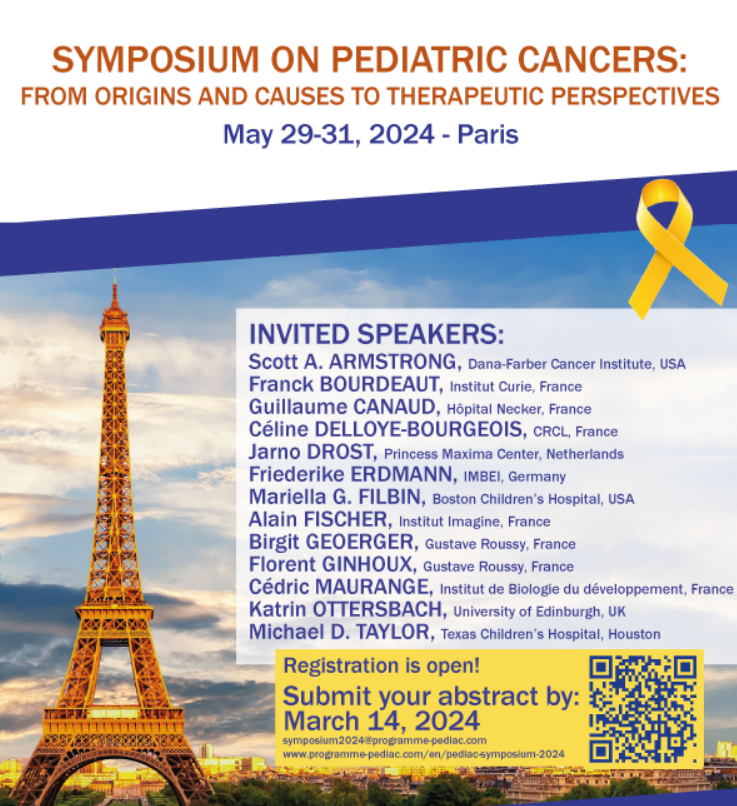
Symposium PEDIAC
Symposium on Pediatric Cancers from May 29th to 31st, 2024

Health of Children Born After Assisted Reproductive Technology: No Overall Increase in Cancer Risk, But a Slight Increase in the Risk of Leukaemia Cannot Be Excluded
The Inserm team, Epidemiology of Childhood and Adolescent Cancers (EPICEA – UMR Inserm 1153) and the scientific interest group EPI-PHARE (ANSM/Cnam), together with experts in